Review: A Tehran So Quiet and Other Stories by Mehdi M. Kashani
I received a free copy of this book from the publisher in return for an honest review.
‘Focusing on the indelible effects of displacement on the Iranian diaspora’s psyche, Mehdi M. Kashani’s debut collection presents narratives that, though often unresolved, remain faithful to the depth of the emotion they depict.
‘The 12 stories in A Tehran So Quiet delve into familial tensions, interracial relationships, trauma, infidelity, misunderstandings, and sexual dalliances. Sisters on the outs who reunite to settle family matters.
‘A girl leaves an unresolved relationship at home to join a man she married abroad. A father seeks connection with his young son in the aftermath of divorce. A woman grapples with the West’s indifference to Iran’s political turmoils. A man takes extreme measures to protect his wife’s honour.
‘This collection will resonate deeply with readers, particularly those affected by immigration and diasporic experiences, and with anyone drawn to raw, multicultural explorations of human complexity.
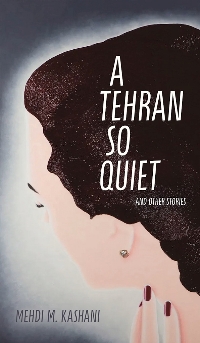
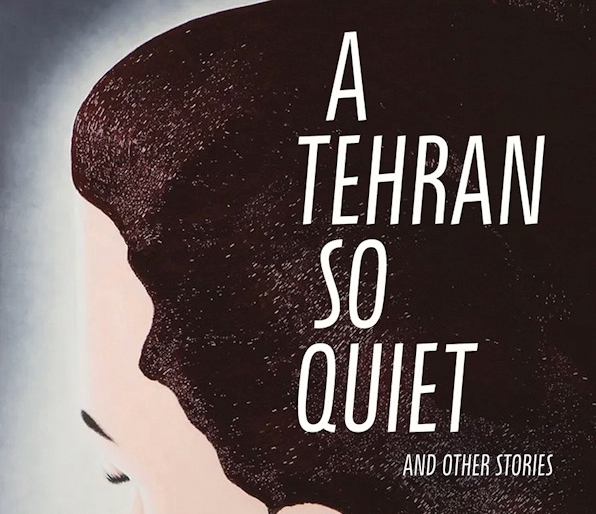
A Tehran So Quiet and Other Stories, by Mehdi M. Kashani, features 12 stories of interpersonal conflict or misunderstanding, all set in Iran and/or Canada.
While the collection’s title alludes to one particular story, it feels applicable to the book as a whole, as all the stories include silent internal battles and difficulties between family and friends that may not necessarily impact the wider world, but feel monumental to those involved and convey truths about human nature more generally.
A Tehran So Quiet and Other Stories is a great read. As well as enjoying the small, domestic-level drama of each story, wanting to know how things unfolded and turned out (sometimes being thwarted when it came to the latter!), and getting emotionally stirred-up on behalf of the more sympathetic characters, I found myself continually drawing thematic connections between the various scenarios.
Immigration from Iran to Canada is a major theme that features in all but one of the stories. Kashani shows how immigrants feel the pull of home, however settled they are in their new country. In Bazaar Borzorg, a young woman, Zara, is compelled to make a trip back to Iran to intervene in her divorcing sister Neda’s custody battle, even though the two of them haven’t spoken for years; in After the Election, main character Rana struggles to get her Canadian husband and his family to understand why she’s so upset and preoccupied by Mahmoud Ahmadinejad’s election victory now that she lives in a “safe” country. Some of the stories revolve around groups of friends who share the experience of being Iranian in Canada, and can therefore relate to one another in many (but not all!) ways.
Another line of exploration is the range of motivations for, and feelings about moving from Iran to Canada. For some, such as Nima in Stray Dandelions, immigration is a no-brainer because of the opportunities and lifestyle on offer in Canada compared with Iran. Nima takes steps to bring his sister Niloo over, ignoring her objections despite her being a grown woman with a degree.
In Dayi, meanwhile, protagonist Parveez has stayed in Iran while his wife and young adult children have been living in Canada, due to his attachment to the business he founded and his imperviousness to Canada’s charms. Don’t feel too much sympathy for him, though: he’s become a “Sugar Daddy” to Shireen, who’s around the same age as his daughter, and he totally over-reacts when he overhears her referring to him as cute and harmless.
A related theme is that of women turning out to be less naïve and more cynical than others suppose them to be. This is especially exemplified by Slight Turbulence Ahead, where Pardis is on her way to Vancouver to live with her new husband, Narimaun. Narimaun has a well-deserved reputation as a womaniser, and even has ex-turned-friend-with-benefits Ronak in his bed just hours before Pardis’ arrival. Ronak and others who are familiar with Narimaun have constructed for themselves an image of Pardis as virginal and traditional but, as we learn, Pardis has left a love interest of her own behind in Tehran, and doesn’t have high expectations of this marriage of convenience.
This thread of people being “just as bad as each other” runs through a few of the other stories, most notably two of my favourites in the collection. In Move Around Us – which captivated me with its fourth wall-breaking and supernatural element – four friends start off by judging one another and comparing their pain, then realise they all have regrets pertaining to a fifth friend who died in an accident, and come together to summon her so they can apologise and attain closure.
In The Naked Dream – which stood out to me due to its suspense-thriller vibe – teacher Masoud disciplines teenage pupil Vahid for bringing in photos he’s surreptitiously taken of his next-door neighbour, Roya, in the shower. However, Masoud also likes looking at the photos: so much so that he contrives to meet Roya, and ends up marrying her. When Vahid meets Masoud again as an adult, he seizes the opportunity for blackmail, and Masoud is compelled to call in a favour from a friend with dodgy connections…
An additional motif is two characters forming a bond as one or both of them attempts to overcome a difficulty with a third character they have in common. In Bazaar Bozorg, this is Zara and her five-year-old niece, Darya; in Stray Dandelions, it’s Niloo and Nima’s wife, Athena.
For all this talk of themes, I haven’t used my favourite story in the collection as an example! Kafkaesque is a sweet, funny, and moving story in which a recent divorcé makes a pet of a cockroach he finds in his apartment because his seven-year-old son – who’s just learned the origin of the titular word – insists it’s Gregor Samsa. This action initially increases his ex-wife’s contempt towards him, but the story ends with the former couple on a slightly less combative footing.
A Tehran So Quiet and Other Stories is an entertaining, contemplative, and stirring collection.